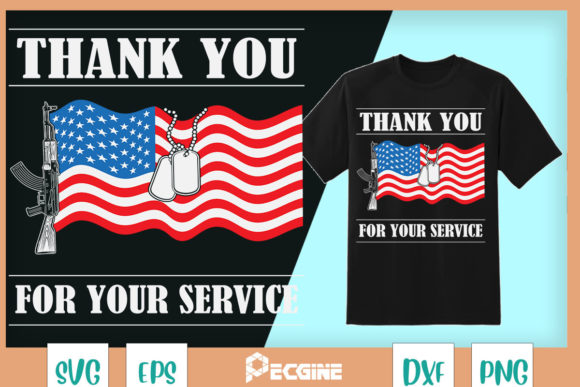
Thank You for Your Service
A Designer’s First Look: Clean, Respectful, and Ready for Real Fabric
When I opened Thank You for Your Service for the first time—pulling it into my design software—I wasn’t scanning for flash or novelty. I was asking: Does this feel like something I’d confidently stitch on a veteran’s gift sweatshirt? A boutique apron for a military family-owned café? A soft baby onesie handed to a new parent who just returned from deployment? The answer was yes—immediately. The layout is centered, balanced, and uncluttered. There’s no excessive ornamentation, no distracting flourishes—just clear, dignified lettering with subtle weight variation that reads well at medium sizes (3.5"–5"). It lands somewhere between classic serif gravitas and modern sans-serif warmth—not too formal, not too casual. That duality makes it unusually flexible across embroidery projects.
Where It Shines: From Tote Bags to Tea Towels
I tested Thank You for Your Service as the focal point on a heavyweight cotton tote bag for a local VA outreach event. Stitched in navy thread on natural canvas, it held up beautifully: legible from six feet away, crisp in the curves of the “S” and “R”, and grounded enough to avoid looking like a sticker slapped on. It performed just as well on a midweight fleece sweatshirt—no puckering, no thread breaks—thanks to what appears to be thoughtful stitch direction and moderate fill density. As a machine embroidery design, it’s especially strong for custom apparel, embroidered patches, and nursery decor where tone matters more than trend. I also used it on a linen tea towel for a holiday craft fair—stitched in ecru on charcoal linen—and customers consistently paused to read it aloud. That kind of quiet resonance is rare in T-Shirt Designs meant for broader use.
What Makes It Work for Small Business Owners
- Brand consistency: It doesn’t shout—it affirms. That builds trust faster than flashy graphics when selling handmade products tied to service, sacrifice, or gratitude.
- Giftability: Buyers don’t need to “get” a joke or decode symbolism. They feel the intention right away—making it ideal for personalized gifts, wedding favors for military couples, or boutique merchandise.
- Digital versatility: With SVG, PNG, DXF, and EPS files included, it adapts smoothly—not just for embroidery machines but for laser-cut wood signs, vinyl decals, or printable mockups you’d use to pitch to wholesale clients.
Where to Proceed Thoughtfully
This isn’t a one-size-fits-all embroidery file—and that’s a good thing. Its strength lies in intentionality, not universality. Here’s where I recommend pausing before stitching:
- Small hoop sizes (under 4"): The letter spacing and stroke weight assume breathing room. On a 3" cap front, the text may feel cramped or lose clarity—especially the inner counter of the “O” or tight curve of the “G”.
- Thin or stretchy fabrics: While the design itself isn’t overly dense, it relies on clean satin-stitch edges. On jersey or lightweight rayon, skip light stabilizer—go straight to cutaway + tear-away combo to prevent shadowing or distortion.
- Dark fabric + light thread: The design’s subtle contrast works best when thread color supports readability. In white thread on black twill, test stitch density first—the fill areas can look slightly heavy if not optimized for your machine’s tension.
- Curved surfaces (caps, baby bonnets): The straight baseline means it won’t auto-flow over domes or crowns. For caps, consider slight manual arc adjustment—or pair it with a small anchor icon (like a star or ribbon) to visually ground it.
Design Notes Every Embroidery Professional Should Check
- Always test on scrap fabric—same type, same stabilizer, same thread brand you’ll use for the final product.
- Review stitch density in your embroidery software. If fill areas look overly solid or thread-heavy, reduce density by 5–8% for breathable wearables like t-shirts or baby clothes.
- Confirm hoop size compatibility. Though not stated in the listing, measure the design’s bounding box—most versions of Thank You for Your Service sit comfortably in a 5"x7" hoop, but verify before hooping a delicate garment.
- Inspect tiny details at 200% zoom: Look for stray nodes in the vector files, overlapping paths in the EPS, or anti-aliased edges in the PNG that could confuse your digitizing software.
- Test black-and-white mockups before listing on Etsy or sending client proofs—this reveals contrast issues invisible on screen.
- Check licensing terms carefully. Since this is a digital embroidery file, confirm whether commercial use (e.g., selling finished embroidered patches or apparel) is permitted—don’t assume.
Final Thought: Not Just a Graphic—A Quiet Statement
Thank You for Your Service doesn’t try to be everything. It’s not an applique design with layered fabrics, nor a complex monogram with scrollwork. It’s a focused, respectful Graphics asset built for impact through restraint. When stitched on a kitchen towel for a military spouse’s small shop, it didn’t just say “thank you”—it signaled care in execution, clarity in message, and confidence in presentation. That’s what elevates a handmade product from nice to meaningful. Whether you’re an Etsy seller building a niche around appreciation-themed goods, a craft fair vendor curating heartfelt merchandise, or a decorator stitching custom apparel for community events—this design earns its place not because it’s trendy, but because it’s true. And in embroidery, truth stitches cleaner.