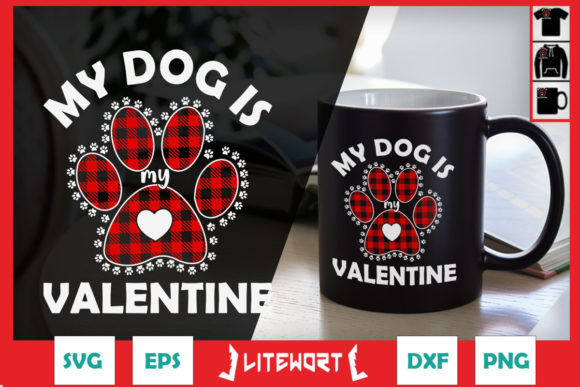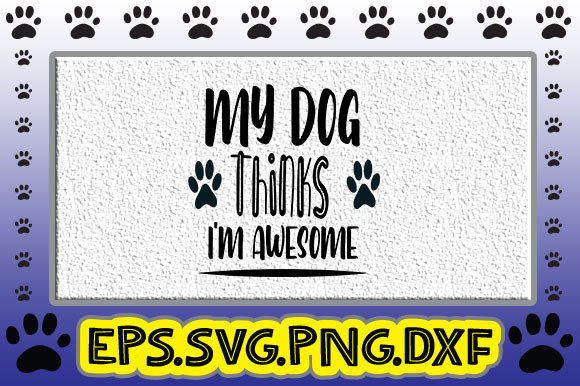
My Dog Thinks I’m Awesome
A Designer’s First Look: Playful, Bold, and Instantly Relatable
When I opened My Dog Thinks I’m Awesome for the first time, I didn’t just see typography—I saw a mood. It’s confident without being loud, warm without being cutesy, and clean enough to hold up across multiple product types. The lettering has gentle curves, open spacing, and a hand-drawn charm that avoids looking stiff or overly digitized. As a designer who regularly selects embroidery files for real-world production—not just digital previews—I immediately pictured it stitched on a natural canvas tote bag for a local pet boutique. That’s where this design lives best: in everyday handmade products with heart.
How It Performs Across Real Embroidery Projects
I tested My Dog Thinks I’m Awesome across several common craft business applications—and it held up remarkably well. On midweight cotton sweatshirts? Crisp, legible, and full of personality. On linen tea towels? The clean lines translated beautifully into satin stitch, with no crowding or bleeding at the curves. For baby onesies, I scaled it down slightly (using the SVG file for precision), and it retained clarity even at 3.5 inches wide—no lost detail in the “o” or “w” shapes.
As an embroidered patch, it worked especially well when backed with medium tear-away stabilizer—no puckering, no thread nesting. On denim aprons for a small kitchen goods shop? Yes. On structured caps? With caution—more on that below. And for Etsy sellers listing personalized gifts, this design is a quiet standout: it doesn’t scream “trendy,” but it feels timeless enough to sell year after year, especially alongside dog-themed nursery decor or holiday stockings.
Where to Use It Thoughtfully—Not Just Everywhere
Like any strong typography-based machine embroidery design, My Dog Thinks I’m Awesome shines brightest when matched to the right context. It’s not ideal for ultra-small hoop sizes (under 4×4 inches) without careful scaling—some letters sit close together, and shrinking too far risks losing the friendly rhythm of the spacing. On highly textured fabrics like bouclé or thick terry cloth, I recommend adding a light cut-away stabilizer underneath to keep the letterforms defined.
Stretchy fabric (think lightweight knits or baby rib) needs extra attention: test the fill stitch density first—too dense, and you’ll get stiffness; too sparse, and the letters won’t read cleanly. Dark fabric works beautifully—if you choose high-contrast thread (like bright white or butter yellow), but avoid pale pastels unless you’re stitching on cream or oatmeal tones. And curved surfaces—like the front panel of a cap—require repositioning the design so the baseline stays level; otherwise, the phrase can appear subtly skewed once hooped and stitched.
What It Adds to Your Finished Product—Beyond Aesthetics
This isn’t just about how My Dog Thinks I’m Awesome looks—it’s about how it makes your customer *feel*. There’s a quiet confidence in the phrase, and that transfers to the handmade product. Buyers recognize sincerity in well-executed typography, and that builds trust. When stitched cleanly on a custom embroidered pillow cover or a boutique sweatshirt, it reads as intentional, not generic. That perception lifts perceived value—and supports higher pricing for your craft business.
For Etsy sellers and small shop owners, it also strengthens brand consistency. Pair it with simple dog silhouette icons or paw-print accents, and you’ve got a cohesive visual language for a seasonal collection—no need for over-designed graphics. And because it’s rooted in emotional resonance rather than fleeting trends, it stays gift-worthy through holidays, birthdays, and “just because” moments.
Practical Notes Every Embroidery Designer Should Check
- Always test on scrap fabric first—especially if you’re using it for commercial embroidery or client work. Stitch density, thread tension, and stabilizer choice all shift with fabric weight and fiber content.
- Review small details in your embroidery software: check corner sharpness, curve smoothness, and whether any internal angles might cause thread breaks on older machines.
- Confirm licensing before selling finished items. Since this is a digital embroidery file from a Graphics category seller, verify whether personal use, small business use, or resale of physical products is permitted.
- Use proper stabilizer—medium-weight cut-away for knits, tear-away for stable wovens, and fusible for lightweight linens.
- Check contrast in black-and-white mockups. Typography designs live or die by readability—what looks bold on screen may fade on dark fabric without testing.
- Compare light and dark fabric backgrounds before finalizing thread colors. Some shades (like heather gray or charcoal) behave differently than pure black or white.
Final Thoughts: A Reliable, Human-Centered Design Asset
My Dog Thinks I’m Awesome isn’t flashy—but it doesn’t need to be. In a landscape crowded with overdesigned, overcomplicated embroidery files, its simplicity is its strength. It fits naturally into Crafts projects that prioritize authenticity: personalized gifts, small-batch apparel, boutique merchandise, and heartfelt holiday items. As a designer who evaluates hundreds of digital embroidery files each year, I keep returning to this one—not because it’s perfect in every technical sense, but because it works quietly, reliably, and warmly across real-life uses.
If you’re an Etsy seller building a pet-themed line, a craft fair vendor curating handmade home goods, or a small shop owner sourcing embroidery design assets for custom apparel—it’s worth adding to your library. Just remember: let the design breathe. Give it the right fabric, the right stabilizer, and the right scale—and it’ll do the rest.