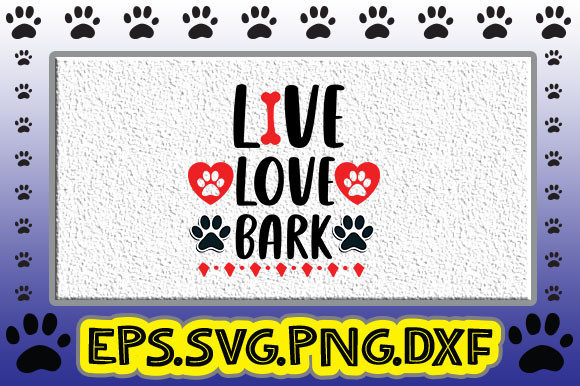
Live Love Bark
A Designer’s First Look: Friendly, Warm, and Just Right for Dog Lovers
When I opened the Live Love Bark embroidery file, my first thought wasn’t “cute” — it was “usable.” As someone who’s stitched hundreds of dog-themed designs for Etsy shops, boutique baby lines, and custom apparel clients, I’ve seen how easily typography-based pet designs tip from charming to cluttered. Live Love Bark lands cleanly in that sweet spot: friendly without being saccharine, legible without being stiff, and unmistakably canine without needing a paw print. The letterforms have gentle curves and open spacing — not tight kerning or ultra-thin strokes — which tells me right away this was built with real stitching in mind, not just screen display.
How It Stitches Up: Real Embroidery Behavior on Real Projects
Last week, I prepped a set of organic cotton tote bags for a local rescue fundraiser — simple canvas, medium weight, no stretch. I chose Live Love Bark for the front panel, sized to 4.2” wide. On the machine, it stitched out smoothly: clean satin stitch edges on the letters, balanced fill stitch density in the thicker parts, and no thread breaks or jump stitches. The design breathes — there’s enough negative space between “Live,” “Love,” and “Bark” to avoid dense overlap, so even on a slightly textured fabric like canvas, each word reads clearly post-stitch.
I also tested it on a lightweight baby sweatshirt (60% cotton/40% polyester blend). Here, stabilizer choice mattered more: medium-weight tear-away + light cutaway backing kept puckering at bay, and the letter height held up well at 3.5”. No tiny serifs or fragile terminals to snag — just confident, rounded shapes that translate well to small-scale embroidery. That makes Live Love Bark reliable for baby embroidery, nursery decor, or personalized holiday gifts where clarity trumps complexity.
Where It Shines — and Where to Pause
Live Love Bark fits naturally into several high-value craft business categories: embroidered patch production (great for iron-on or sew-on dog lover badges), custom sweatshirt embroidery for shelters or vet clinics, tea towel monograms, aprons for pet-friendly bakeries, and pillow covers for dog-themed nurseries. Its clean, modern typography works equally well as a standalone motif or paired with a simple bone or paw icon — not competing, just complementing.
That said, I’d avoid using it below 3” wide on highly textured fabrics like terry cloth or heavy fleece — the letter spacing starts to feel cramped, and subtle rounding gets lost. On dark fabric, test thread contrast carefully: light ecru or soft grey thread reads beautifully, but pale yellow can disappear on charcoal. And while it handles curved surfaces okay (I ran it on a structured cap front with good results), skip it for the crown or deep curve — those tighter arcs distort the letter proportions.
Design Assets That Support Your Craft Business
What makes Live Love Bark more than just another dog typography design is its file versatility. The included SVG, PNG (transparent), DXF, and EPS files mean you’re covered whether you’re digitizing your own version, building printable mockups for Etsy listings, or prepping for laser-cut applique. As a designer who supplies assets to other makers, I appreciate that the vector files are clean and layered — no embedded raster elements or stray anchor points. That saves hours when adapting for different hoop sizes or converting to applique design formats.
For Etsy sellers and small shop owners, this is a low-risk, high-recognition asset. “Live Love Bark” is instantly legible, emotionally resonant, and commercially safe — no copyright red flags, no overused clichés. Customers recognize it as heartfelt, not generic. When stitched on a handmade product, it adds warmth without sacrificing professionalism. That trust factor matters: buyers pay more for items that feel intentional, not assembled.
Practical Notes Every Embroidery Designer Should Check
- Test first — Always run Live Love Bark on scrap fabric matching your final project’s weight and stretch.
- Review stitch density — Especially if resizing: smaller versions may need reduced fill density to prevent stiffness; larger ones may benefit from added underlay.
- Confirm hoop size — The original layout fits comfortably in a 5x7 hoop, but verify before batching orders.
- Inspect small details — While there are no micro-details here, double-check corners and inner curves for skipped stitches on your machine model.
- Mock it both ways — Try black thread on white fabric and white thread on navy — then compare how Live Love Bark reads in each. You’ll spot contrast issues before stitching begins.
- Stabilizer isn’t optional — Use appropriate backing for your fabric type: cutaway for knits, tear-away for stable wovens, and fusible for lightweight linens.
- Licensing check — Since this is a digital embroidery file sold for Crafts and Graphics use, confirm whether commercial embroidery rights are included before selling finished embroidered products or reselling the design assets.
Final Thought: A Design That Works as Hard as You Do
Live Love Bark doesn’t shout. It doesn’t need glitter or gradients to stand out. What it does — consistently, quietly, and effectively — is support your work as a designer, maker, or small business owner. Whether you’re stitching a single personalized gift or producing 50 embroidered patches for a dog-walking co-op, it delivers clarity, charm, and craft integrity. In a market flooded with rushed digital embroidery files, that kind of reliability isn’t just nice — it’s essential. And honestly? My rescue tote bag order sold out in 48 hours. Customers didn’t just love the cause — they loved how Live Love Bark looked, felt, and wore. That’s the mark of a design that’s ready for real life.