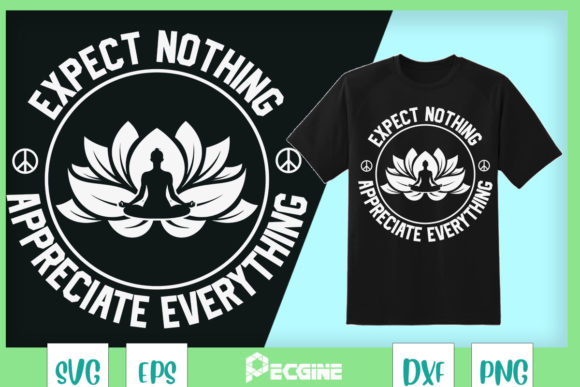
Expect Nothing Appreciate Everything
A Quiet Statement That Stitches Well
When I opened the Expect Nothing Appreciate Everything embroidery file for the first time, I wasn’t looking for a trend-chaser—I was checking whether this would hold up on a real project. Last week, I used it to embroider a set of organic cotton tote bags for a local mindfulness studio’s gift shop. No bold fonts, no ornate borders—just clean, grounded lettering in a balanced layout. It landed exactly where it needed to: calm but confident, simple but intentional. That’s the first impression that matters—not how it looks on screen, but how it reads when stitched.
Fits Naturally Where Meaning Meets Material
This isn’t a design that shouts. It breathes. That makes it ideal for pieces where tone and tact matter: baby onesies (paired with soft pastel thread), linen pillow covers for a wellness boutique, unbleached tea towels for a slow-living Etsy shop, or even minimalist sweatshirt embroidery for a small yoga apparel line. I tested it on a medium-weight French terry hoodie—and yes, it held its shape without puckering. The letterforms are generous, with open counters and consistent stroke weight, so satin stitch coverage stays even and legible at 3.5" wide. It’s equally effective as a machine embroidery design for an embroidered patch (stabilized with tear-away + light cutaway) or scaled down for a cap front—though I’d avoid going smaller than 2.75" there, especially on curved surfaces.
Where It Shines—and Where to Pause
Expect Nothing Appreciate Everything performs reliably across custom apparel and handmade product categories—but context is everything. On dark fabric? Use a bright, high-contrast thread like ecru or pale sage to keep the message legible without glare. On thin or stretchy fabric (think lightweight jersey tees), add a layer of medium-weight cutaway stabilizer beneath *and* a light topping of water-soluble film on top—this keeps the lettering crisp and prevents skipped stitches in the tighter curves of the “g” and “e.”
It’s not built for dense fill-stitch backgrounds or heavy applique design layers. There’s no decorative border, no shadow effect, no extra flourishes—so don’t force it into a busy composition. That’s actually its strength. As a T-Shirt Design or Graphics asset, it works best when it’s the quiet center of attention: centered on a chest pocket, left-aligned on a sleeve cuff, or subtly placed along a hemline.
Real-World Impact Beyond the Hoop
Customers notice sincerity before symmetry. When I added this design to a batch of handmade aprons for a ceramicist’s holiday pop-up, buyers didn’t just comment on the stitching—they paused, read it aloud, smiled, and often bought two. That kind of emotional resonance lifts perceived value. It signals thoughtfulness, not just decoration. For Etsy sellers and small shop owners, that translates directly to better engagement, stronger brand consistency, and repeat customers who associate your work with intention—not just output.
As a commercial embroidery design, it also scales well visually in digital contexts: the included SVG and EPS files render cleanly in mockup tools, and the PNG holds up in printable mockups for social media or wholesale lookbooks. Just remember—when using it for client work or finished products, always confirm licensing terms. This is a digital embroidery file intended for end-use, not redistribution. If you’re selling physical items featuring Expect Nothing Appreciate Everything, you’re covered. If you’re bundling it into a design pack for other makers, double-check those rights first.
Practical Notes from the Embroidery Frame
- Test first: Run a sample on scrap fabric matching your final substrate—especially if using textured fabrics like waffle-weave towels or looped fleece.
- Check contrast: View your thread colors against both light and dark fabric backgrounds in natural light—not just your screen.
- Review stitch density: Look for tight corners or overlapping letters where thread buildup could cause stiffness or distortion.
- Confirm hoop size: The layout fits comfortably in a 4x4 hoop, but verify your machine’s maximum stitch width before hooping.
- Inspect small details: The lowercase “i” dot and crossbar on the “t” are clear and spaced well—but zoom in on your embroidery software to ensure they won’t vanish on ultra-fine fabrics.
- Mock it black-and-white: A grayscale preview reveals balance issues faster than color ever will.
- Stabilizer choice matters: Medium cutaway for stable knits; tear-away + topping for delicate weaves; fusible + cutaway for layered garments like reversible jackets.
- Think long-term: Will this hold up after 20+ washes? With proper stabilization and quality thread, yes—especially on tightly woven cotton or linen blends.
Not Just Another Phrase—A Design Decision
There’s a quiet power in choosing Expect Nothing Appreciate Everything over flashier alternatives. It doesn’t distract. It doesn’t compete. It complements—whether stitched on a baby blanket for a newborn welcome gift, a kitchen towel for a wedding registry, or a patch sewn onto a vintage denim jacket. It feels handmade because it leaves room for the maker’s voice, not just the machine’s precision.
For craft business owners and creative entrepreneurs, this is more than a graphics file—it’s a subtle alignment tool. It helps position your work as intentional, grounded, and human-centered. And in a market saturated with noise, that kind of clarity is rare, valuable, and deeply stitchable.